New Energy Rules in Spain: Why Buyers Look at the Energy Label First
Let me give you a practical example.
You spot a beautiful existing property. Great location. Good price. On paper it looks like a bargain. Until you see the energy label (EPC): an F rating.
Because a calculation of the costs for insulation, new windows and a modern climate system quickly adds up to an extra investment of €25,000. The question is whether this house is still attractive to you?
That is exactly the shift that is currently taking place.
The new energy requirements in Spain are no longer just bureaucratic boxes to tick. They have a direct impact on what you pay, whether you can rent the property out and how easily you can sell it again later.
If you are planning to buy property in Spain, especially from abroad, you need to understand this before you sign. Not afterwards.
What are the new energy requirements in Spain and why are they important?
Here is an overview of the most important formal rules as well as a number of proposed regulations:
- Every property must have an energy performance certificate (EPC) demonstrating its energy efficiency.
- Scores run from A (best) to G (worst).
- Sellers are required to show the EPC before the property is listed on the market.
- From 2030, homes that are rented out or sold will likely no longer be allowed to have an F label. A minimum E label will then be mandatory.
- From 2033, the requirement will be further tightened, and homes that are rented out or sold will likely need to have a minimum D label.
Once these rules become formal, it means that homes with a poor label must be renovated to meet the requirements, or that they will be more difficult to sell or rent out.
It also means that banks are imposing increasingly strict requirements on EPC ratings when approving mortgages.
Are there differences between Andalusia (Costa del Sol) and the Comunidad Valenciana (Costa Blanca) regarding energy requirements?
Requirements can certainly vary by region. In the Comunidad Valenciana, which includes the Costa Blanca, rules are particularly strict and subsidies are actively used to support property improvements. Once the rules will be formal, since 2030, only properties with an energy label E or better may be sold or rented in the Comunidad Valenciana, and enforcement is rigorous. Additional rules and inspections also apply to tourist rentals, particularly in coastal areas such as the Costa Blanca.
In Andalusia, EPC registration is compulsory with the Agencia Andaluza de la Energía, and national Spanish requirements apply, though with somewhat less stringent local enforcement than in the Comunidad Valenciana. The focus there is primarily on encouraging energy-efficient new builds and renovations.
EU Climate Targets
Spain is under pressure to meet EU climate targets, and inefficient properties represent a major obstacle. While you can still buy a property with a low label, the reality is:
- Buyers are avoiding them because long-term costs can turn out unexpectedly high.
- Banks are scrutinising older or inefficient properties more critically when approving mortgages.
- Rental regulations are tightening and properties with a poor EPC rating may struggle to obtain a rental licence.
This is not a problem for the future — it is happening now.
The Real Impact on Buyers
Most foreign buyers underestimate this aspect. They focus on:
- Location: Often the first priority, but no longer sufficient on its own.
- Price: Attractive at first glance, but hidden costs can completely wipe out the expected saving.
- Views: A beautiful outlook is worth a great deal, but an energy-inefficient home can become a money pit.
Energy efficiency is no longer a secondary concern. Ignoring it can lead to high running costs, a difficult resale and complications with letting.
Running Costs Add Up Fast
Older properties eat money. Poor insulation leads to higher electricity and gas bills. Air conditioning in summer and heating in winter can cost thousands of euros per year.
Resale Becomes Harder
Today's buyer is more discerning and asks about the energy label immediately. If the rating is low, either the price is negotiated down sharply or the buyer walks away entirely, even if the location is ideal.
Rental Income Is at Risk
There is a clear trend towards restricting rentals of inefficient properties. For investors, this is critical — properties with a low label can face restrictions or higher costs when applying for a rental licence.
Renovation Costs Are Significant
This is no longer a cosmetic refresh. Structural improvements to meet energy standards cover insulation, windows, solar panels and heating and cooling upgrades.
Average Upgrade Costs
For most older properties (particularly those built before 2006):
- Double glazing: €3,000 to €10,000 or more, depending on the size and number of windows.
- Insulation upgrades: €5,000 to €20,000, depending on wall, roof and floor requirements.
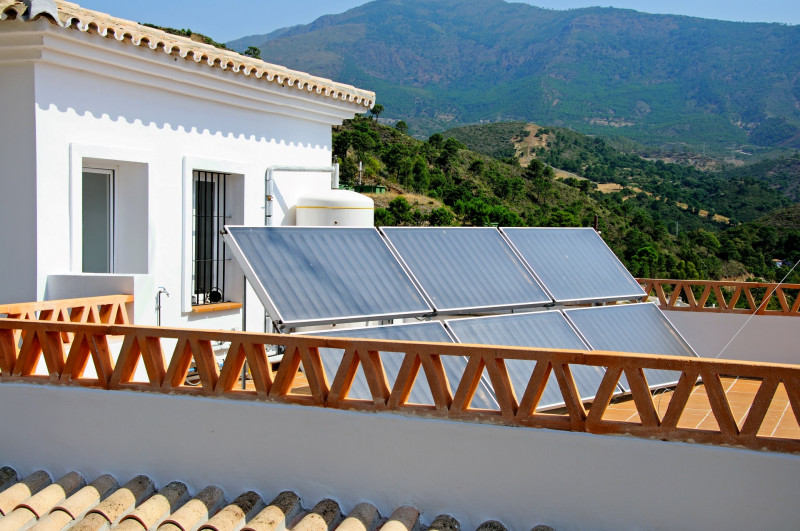
- Solar panels: €4,000 to €12,000, depending on roof area and orientation.
- Heating and cooling systems: €2,000 to €8,000, depending on the layout of the property.
Even a modest renovation plan can easily cost €15,000 to €30,000. It is essential to factor this into your calculations before making an offer.
Market Trends
The shift towards energy efficiency is highly visible in the market right now:
- Properties with a label A to C sell faster because buyers know running costs will be lower.
- New-build projects dominate demand from foreign buyers as they already meet the highest energy standards.
- Properties below label D are scrutinised more closely — buyers negotiate harder or pull out.
- Buyers are prioritising long-term cost savings over purely aesthetic features.
It is no longer just about lifestyle — it is about cost control and future-proofing.
New Build vs. Existing Property
This decision carries more weight than ever before:
New-Build Projects
With a new build you get:
- An energy label A or B, meeting future regulations.
- Lower monthly costs thanks to modern, energy-efficient systems.
- Compliance with upcoming rules, avoiding future penalties or mandatory upgrades.
- Minimal risk of unexpected costs.
The purchase price may be higher, but you face far fewer unexpected expenses down the line.
Existing Property (Resale)
With an existing property you get:
- Potential added value if energy upgrades are carried out correctly.
- Unique architectural character that new builds often lack.
- Potentially better locations or larger plots.
- An opportunity to negotiate based on the EPC rating and renovation costs.
When searching for properties, focus on EPC labels from the outset. It saves time and avoids financial surprises.
What Can Delay or Complicate the Purchase
Energy regulations can affect the transaction:
- Missing or outdated EPC certificates can delay offers or valuations.
- Delays in obtaining documents from local authorities can hold up the transfer.
- Regional differences in enforcement can cause unexpected complications.
- Rental licence issues tied to energy ratings can block investment opportunities.
Notaries will check compliance and banks may raise questions about the EPC score. Good preparation prevents unnecessary delays.
Why Choose Casa De Bas
Most agents simply show you the property. We look at the full picture — including the total cost and long-term consequences:
We Look at the Full Cost Picture
- Not just the purchase price, but realistic running and upgrade costs too.
- Clear overviews of what to expect with different property types.
Honest Answers
- If a property needs a certain amount spent on upgrades, we tell you before you commit.
- Honest advice prevents unpleasant surprises later.
A Local Network That Counts
- Reliable lawyers, financial advisers and gestors who know Spanish regulations inside out.
- The entire purchase process is conducted in your language so that even the complex detail is easy to follow.
Focus on the Foreign Buyer
- We understand where international buyers commonly go wrong.
- Guidance on legal and fiscal matters, energy requirements and rental regulations.
Post-Purchase Support
- Advice on renovations, energy upgrades or improvements.
- Ongoing support, even after completion at the notary.
Frequently Asked Questions
Is an EPC really that important?
Yes. It affects the value of the property, market demand and legal compliance.
Can I still buy a property with a low label?
Yes, but you must factor the upgrade costs accurately into your budget.
Will Spain ban inefficient properties?
Not entirely, but restrictions — particularly around rental — are increasing.
Is new build worth the investment?
Yes, due to lower long-term costs and less exposure to changing regulations.
What is the biggest mistake buyers make?
Ignoring energy costs until after the purchase.
Conclusion: Buy Smart or Pay Later
Energy efficiency is now an integral part of any deal. Ignoring it leads to higher bills, a lower resale value and unexpected renovations.
Get it right from the start and you buy with the future in mind, negotiate from a stronger position and avoid costly surprises.
At Casa De Bas, we help you see the full picture before you decide. Focus on properties that meet the new standards and get in touch with us to discover the real opportunities in Spain.