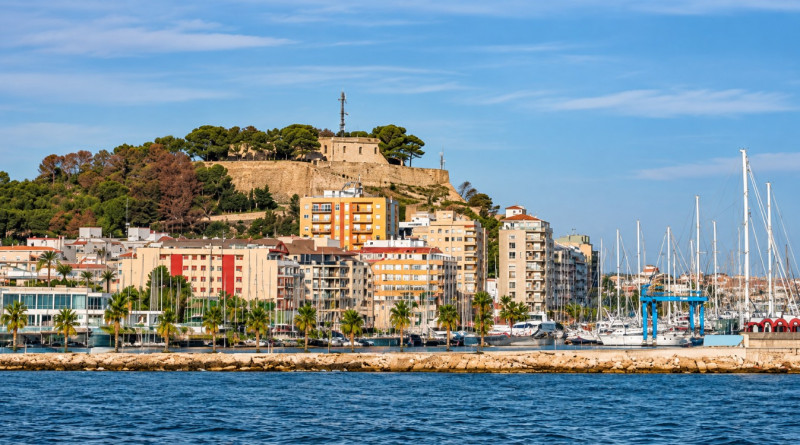
You have a budget of €500,000 and want to buy a house in Dénia. Should you choose an apartment near the harbour and historic centre, a property close to the sandy beach at Las Marinas or a villa overlooking Montgó? The asking price tells only part of the story. Your everyday surroundings, accessibility, maintenance costs and legal considerations can differ considerably.
These differences are also reflected in the Casa de Bas property portfolio. A duplex apartment near the entrance to Las Marinas was previously advertised for €472,000, with four bedrooms, three bathrooms, 114 m² of built area, a parking space and a storage room. A villa near Marineta Cassiana was advertised for €925,000, with two bedrooms and a 1,100 m² plot. Comparing these properties is not simply about price or floor area, but about how you want to live.
These figures are published asking prices, not completed sale prices or guaranteed current listings. Availability may change. Nevertheless, these examples illustrate the questions you should ask before deciding.
In this guide, you will discover Dénia's main residential areas, the differences between apartments, townhouses, villas and fincas, how summer and winter affect everyday life, and the legal and financial steps involved in purchasing property.
Want to see which properties fit your budget? Explore the published Dénia properties with Casa de Bas and compare their exact location, accessibility, outdoor space and ongoing costs before arranging a viewing.
Why Buy a House in Dénia?
Dénia is situated on the northern Costa Blanca, with the Mediterranean Sea on one side and the natural landscape surrounding Montgó on the other. The town combines a historic centre, working harbour, sandy beaches, rocky coastline and residential neighbourhoods on the hillsides.
For Dutch buyers, the diversity of locations is particularly attractive. Those who want to walk to shops, restaurants and the harbour may focus on the town centre. Buyers who primarily want to live near the beach might investigate Las Marinas. Anyone seeking privacy, a larger garden and views may prefer Montgó or parts of Las Rotas.
Dénia also has ferry connections to the Balearic Islands, while the region is accessible by road from Alicante and Valencia. Journey times and ferry schedules depend on the route, season and traffic conditions.
Everyday life also changes between summer and winter. During summer, the beaches and harbour area become livelier. Outside the peak season, you gain a different perspective on the shops, residential streets and developments.
Casa de Bas includes Dénia within its northern Costa Blanca service area. In its comparison of the northern and southern Costa Blanca, the agency explains how landscape, property type and personal lifestyle preferences influence the decision.
Which Residential Areas in Dénia Suit You?
Dénia offers several different residential environments. The main differences concern the character of the buildings, distance to everyday amenities, type of coastline and reliance on a car.
| Residential Area | Typical Properties | Often Suits | What to Check |
|---|---|---|---|
| Historic Centre and Harbour | Apartments and townhouses | Buyers who want amenities within walking distance | Lift, parking, noise and building condition |
| Las Marinas | Beach apartments, townhouses and villas | Second-home buyers and beach lovers | Actual distance to the beach, community fees and accessibility |
| Las Rotas and Marineta Cassiana | Apartments and detached villas | Buyers seeking views, nature and coastal living | Access, maintenance and structural condition |
| Montgó and La Pedrera | Villas and houses on sloping plots | Privacy, space and views | Planning permissions, drainage, slopes and plot boundaries |
| Jesús Pobre and Rural Areas | Fincas, village houses and country homes | Rural living and larger outdoor spaces | Land classification, utilities and outbuildings |
Historic Centre and Harbour: Living Close to Amenities
Dénia's historic centre surrounds the castle and the town's older streets. Here, you will find apartments, traditional townhouses, restaurants, shops and everyday services.
The central location is attractive if you do not always want to use a car. However, the properties vary considerably. A renovated apartment with a lift requires a different assessment from an older property on a narrow street.
In older buildings, check the condition of electrical wiring, plumbing, the roof, façade and any signs of damp. Also request information about community fees and the financial position of the building.
For an apartment near the harbour, noise, traffic, parking and access to the entrance are important considerations. Visit the street at different times before deciding.

Las Marinas: Apartments Near Sandy Beaches
Las Marinas stretches along the coast northwest of the town centre. It offers sandy beaches, apartment complexes, smaller residential developments, townhouses and villas.
Distance from the town varies between properties. An apartment near the beginning of Las Marinas may offer very different accessibility from a home further along the coast. Therefore, check the precise location rather than relying on the area name alone.
Casa de Bas has previously advertised a duplex apartment near the entrance to Las Marinas for €472,000. According to the listing, it has four bedrooms, three bathrooms and 114 m² of built area, including approximately 94 m² of usable living space.
The property was described as being approximately 500 metres from the beach, with a lift, garage space, storage room, communal swimming pool and garden. These are specific features worth comparing with other apartments.
A home with these amenities may appeal to a family or second-home buyer, but request current information about this Las Marinas apartment from Casa de Bas, including availability, community fees, IBI and any planned maintenance.

Las Rotas and Marineta Cassiana: Coastline, Nature and Villas
Southeast of the harbour, the coastline changes character. Around Marineta Cassiana and further towards Las Rotas, the environment is different from the long sandy beaches of Las Marinas. This stretch includes rocky sections and smaller coves.
For buyers who prioritise privacy, views and quieter surroundings, this area can be attractive. The housing stock includes apartments and detached villas.
One example from the Casa de Bas portfolio is a detached villa advertised for €925,000, with two bedrooms, two bathrooms, approximately 180 m² of internal space and a plot measuring about 1,100 m².
The listing describes an Ibiza-style villa with views of the sea and Montgó, a swimming pool, garden and parking. It also mentions a short walking distance to Marineta Cassiana.
For this type of villa, it is particularly important to investigate annual maintenance costs, exact ownership records, access, swimming pool installations and any alterations to the building.
Review the published villa near Marineta Cassiana as a specific comparison example. Its asking price and availability must be reconfirmed.

Montgó and La Pedrera: Privacy and Views
Residential areas on the slopes of Montgó appeal to buyers looking for a detached home with greater privacy, outdoor space or views. The changes in elevation can be substantial, and access roads vary between properties.
Casa de Bas has, for example, advertised a villa on Montgó for €750,000, with four bedrooms, four bathrooms, approximately 280 m² of internal space and a plot of around 770 m².
According to the listing, this property is arranged into three separately used living areas, with multiple swimming pools and outdoor spaces. The advertisement also mentions a tourist rental licence.
This makes the property an interesting example of how versatile a villa can be. However, its actual configuration must be checked legally. The existence of several living areas or an advertised tourist licence does not guarantee that every form of occupation or letting remains permitted under current regulations.
For properties of this kind, have the original permissions, any subdivisions, outbuildings, tourist registration and municipal restrictions independently investigated. See the Montgó villa in the Casa de Bas portfolio.

Jesús Pobre and the Rural Surroundings
Jesús Pobre and its surrounding countryside appeal to buyers who want space, nature and a quieter lifestyle. Alongside village houses, the area includes fincas and homes with larger plots.
The main difference from an apartment in the town centre is not simply the distance to Dénia. You should also consider water, electricity, wastewater arrangements, access and the legal classification of the land.
A large plot can provide opportunities for a garden or outdoor living, but not every extension or change of use is permitted.
Before buying, establish which buildings and outbuildings are lawful, how they are registered and what construction or use restrictions apply.
How Much Does a House in Dénia Cost? Casa de Bas Property Examples
A general price per square metre does not provide enough information to assess a property. The asking price is influenced by property type, exact location, size, condition, plot, views and available amenities.
The following examples from the published Casa de Bas portfolio illustrate how substantial these differences can be.
| Property Example | Asking Price | Published Features | Key Comparison |
|---|---|---|---|
| Duplex apartment near Las Marinas | €472,000 | 4 bedrooms, 3 bathrooms, 114 m² | Lift, parking, community fees and distance to the beach |
| Villa on Montgó | €750,000 | 4 bedrooms, 4 bathrooms, 280 m², 770 m² plot | Legal status of living units, pool and permissions |
| Villa near Marineta Cassiana | €925,000 | 2 bedrooms, 2 bathrooms, 180 m², 1,100 m² plot | Views, land, maintenance and accessibility |
| Villa in Marquesa | €1,250,000 | 5 bedrooms, 3 bathrooms, 211 m², 1,161 m² plot | Guest apartment, swimming pool and maintenance |
These details come from individual advertisements and are not market averages or valuations. Check their current status and request the full sales documentation if you are interested.
For example, the villa in Marquesa is advertised with a separate guest apartment, saltwater swimming pool and views. These are different features from those of the Las Marinas duplex, where a lift, garage space and shared facilities play a more important role.
Through the Casa de Bas Dénia property selection, you can compare different property types. Always ask which homes remain available before arranging viewings.
Apartment, Townhouse, Villa or Finca: Which Property Suits You?
Apartment: Less Private Maintenance but Community Fees
An apartment is often practical for buyers who use their property for only a few months each year. In many developments, maintenance of shared areas is organised through the comunidad de propietarios, or owners' community.
However, you depend on collective decisions about maintenance, budgets and potential additional contributions. A complex with a pool, lift and extensive gardens can have very different costs from a small building without these facilities.
Townhouse: More Space, but Clear Ownership Boundaries Are Essential
A townhouse often combines several floors of accommodation with private outdoor space. Within a residential development, there may also be shared gardens, a swimming pool or parking facilities.
Investigate which terraces, gardens and parking spaces legally belong to the property. An area used exclusively by an owner is not necessarily privately owned.
Villa: Privacy and Space with Private Maintenance Responsibilities
A detached villa generally brings greater responsibility for the pool, roof, façade, garden and technical installations. On sloping plots, drainage, retaining walls and access roads can also be significant.
Therefore, ask not only about energy bills but also about actual spending on gardening, pool maintenance and technical equipment.
Finca: Rural Character with Additional Legal Considerations
A finca can offer a large plot and tranquillity. Particularly with rural homes, it is important to investigate land classification, registered buildings, utilities and the potential for alterations.
A large plot or existing outbuilding does not automatically mean you can build additional homes or operate tourist accommodation.
New Build or Resale Property in Dénia?
With a resale property, you can usually inspect the actual home, the condition of its installations and the communal facilities before buying. However, older structures, previous alterations or deferred maintenance may require further investigation.
For new builds, you should review the approved building licence, technical specifications, contractually agreed amenities, protection of advance payments and the documentation required at completion.
Also check how the contract deals with delays, changes to materials and defects discovered on handover. The appearance of a swimming pool or parking space in a brochure does not, by itself, establish clear ownership rights or completion obligations.
For further background, read Casa de Bas's article Buying a House or Villa in Moraira: Complete Buyers' Guide, which also discusses different property types and the purchasing process.
How Do Summer and Winter Affect Life in Dénia?
Dénia is livelier in July and August than during the quieter winter months. Beaches, the harbour, restaurants and roads can become busier during the peak season, while some residential areas are much quieter outside summer.
If you plan to live permanently in Dénia, it makes sense not to judge your preferred neighbourhood solely during a summer holiday. Check whether the shops, healthcare facilities and restaurants you value remain available in winter.
An apartment within a development containing many second homes can feel different in winter from a property on a street with a high proportion of permanent residents.
If you intend to let the property, you must investigate current registration requirements, municipal restrictions and owners' community rules. A desirable beachfront location does not guarantee that tourist letting will be legally permitted or financially profitable.
Anyone considering a long-term relocation should also investigate schools, healthcare, transport options and tax residence. Your personal circumstances determine the most suitable decision.
What Are the Costs of Buying a House in Dénia?
Dénia is in the Valencian Community. Property purchase taxes therefore differ from those in Andalusia, where towns such as Marbella and Estepona are located.
Since 1 June 2026, the general ITP property transfer tax rate for resale homes in the Valencian Community has been 9%. Under the general rules, a rate of 11% applies when the relevant value of the transferred property exceeds €1,000,000. Exceptions and reduced rates exist for buyers meeting specific conditions.
For a qualifying first sale of a newly built residential property, Spanish VAT (IVA) of 10% generally applies, together with any applicable stamp duty (AJD). The correct tax treatment must be established for the individual transaction.
Suppose you buy a resale home for €400,000 and the general 9% ITP rate applies to a taxable value of €400,000. The transfer tax would be €36,000.
This is only an illustration. The actual taxable value may also be affected by the official fiscal reference value. Other costs include legal advice, notary work, registration and potentially financing expenses.
Before signing a reservation or purchase contract, request a calculation based on your specific property and circumstances. The Casa de Bas guide to property buying costs in Spain can help you understand the different expenses involved.
Which Legal Documents Should You Check?
A Spanish deed of sale is not the same as a comprehensive independent legal and structural investigation. It is therefore advisable to have a lawyer investigate ownership and relevant documentation before accepting binding obligations.
- Nota simple. Request a recent extract from the Registro de la Propiedad and have the registered owner, rights, mortgages and other charges assessed.
- Escritura and property description. Check the title deeds and establish whether the ownership details correspond with the proposed transaction.
- Catastro. Compare the cadastral information with the actual property and investigate any discrepancies.
- Building permissions. Check the original construction, extensions, terraces, pools and outbuildings.
- Occupation and use documentation. Establish which licences or declarations are required for the property and its purchase.
- IBI and municipal charges. Obtain recent payment records and investigate any outstanding amounts.
- Owners' community. Request information about debts, monthly or annual contributions, budgets and planned works.
- Energy performance certificate. Request the available certificado de eficiencia energética and review the property's energy performance.
- Building inspection. Where appropriate, have damp, electrical systems, roofs, façades, foundations and technical installations assessed.
- Contract and payments. Have the reservation agreement, deposit, cancellation provisions and deadlines legally reviewed.
A villa with guest accommodation, a swimming pool or a large plot may require additional investigations. The same applies if you intend to let or extend the property.
What Is the Property Buying Process in Dénia?
A careful buying process begins before reserving a home. It is sensible to discuss the essential checks, financing and payment conditions early in the process.
| Stage | What Happens? | What to Consider |
|---|---|---|
| 1. Initial Research | Establish budget, lifestyle requirements and preferred location | Allow for additional buying costs |
| 2. Viewings | Compare properties and their surroundings | Check accessibility, condition and amenities |
| 3. Legal Advice | Appoint an independent lawyer | Discuss investigations before signing |
| 4. Reservation | Agree terms and any reservation payment | Review refund provisions and deadlines |
| 5. Due Diligence | Investigate title, charges, permissions and debts | Resolve uncertainties before completion |
| 6. Financing | Organise mortgage, own funds and documentation | Understand the consequences if finance is declined |
| 7. Notarial Completion | Sign the escritura and complete payment | Check amounts, rights and any required withholdings |
| 8. After Completion | Arrange registration, taxes and utility changes | Keep supporting documents and confirm changes of account holder |
A common example of a Spanish preliminary agreement is a contrato de arras. The consequences of cancellation depend on the particular contractual arrangement and its terms. Do not assume every deposit has identical consequences.
The statutory 3% withholding when purchasing from a seller who is not a Spanish tax resident may also be relevant. This is an amount withheld from the purchase price for the seller's tax settlement, not simply an additional purchase tax charged to the buyer. Have the correct treatment confirmed by an adviser.
Casa de Bas has also published a detailed step-by-step guide for Dutch property buyers in Spain, explaining the process from initial research through to completion.
Financing and Mortgages for Dutch Buyers
Even if you are not a Spanish tax resident, you may be eligible to apply for a Spanish mortgage. The amount you can borrow depends on factors including income, assets, existing financial commitments, the property's valuation and the lender's requirements.
A commonly mentioned financing range for non-residents is approximately 60% to 70% of a relevant property value, but this is not guaranteed. Banks assess each application individually.
If you need financing, establish in advance how much of your own money will be required for the purchase price, taxes and other transaction expenses.
Also determine how the financing conditions will be reflected in any reservation or purchase agreements. A rejected mortgage application does not automatically mean that you can withdraw from a contract without financial consequences.
How Can Casa de Bas Help You Buy in Dénia?
Casa de Bas assists Dutch buyers looking for property on the Costa Blanca and other Spanish coastal regions. On its website, the agency describes an approach combining property selection, viewings and coordination of legal and financial matters.
Through its Koop Zeker plan, Casa de Bas helps buyers keep the journey from initial research to key handover organised. The process involves a Dutch-speaking network of professionals, including lawyers, financial advisers and notaries.
This is particularly relevant in Dénia because checks can differ substantially between property types. A duplex apartment at Las Marinas requires attention to the lift, community fees and shared facilities. For a villa on Montgó, planning permissions, outbuildings, technical installations and the actual layout may need greater scrutiny.
Want to identify the property that suits your plans? Learn more about Casa de Bas's property buying assistance and discuss your budget, preferred location and financing needs before making a binding purchase decision.
Frequently Asked Questions About Buying a House in Dénia
How Much Does a House in Dénia Cost?
Prices depend heavily on the property type, location, floor area, condition, outdoor space and amenities. Casa de Bas has advertised, for example, a duplex apartment near Las Marinas for €472,000 and several villas priced from around €750,000 to more than €1 million. These are individual asking prices rather than official market averages. Check current availability before comparing properties or arranging viewings.
Which Is Better: Las Marinas or Las Rotas?
Las Marinas can appeal if you want to be near long sandy beaches and are interested in apartments or residential developments. Las Rotas offers a different coastal environment, with rocky sections and smaller coves. Your choice depends on beach preferences, desired property type, budget and access to amenities. Visit the exact locations before deciding.
Is Dénia Suitable for Permanent Living?
Dénia offers amenities such as shops, restaurants, healthcare and transport connections to surrounding towns. This can make it suitable for permanent living. However, the practical suitability depends on the particular neighbourhood and property. Test access to everyday amenities and visit your preferred area outside summer as well.
Do I Need an NIE Number to Buy in Dénia?
Foreign buyers normally need an NIE for the purchase and associated tax procedures. You can arrange the application through the designated Spanish authorities. Processing times vary, so start early and obtain advice on the required documents.
How Much Property Transfer Tax Will I Pay in Dénia?
Since 1 June 2026, the general ITP rate for a standard resale property in the Valencian Community has been 9%. Under the general rules, an 11% rate applies above the €1 million threshold. Exceptions and reduced rates are available subject to specific conditions. Qualifying new-build properties have different tax treatment. Request a personalised calculation based on the rules in force on your purchase date.
Can I Obtain a Spanish Mortgage as a Non-Resident?
Yes, Spanish banks may provide mortgages to buyers who do not live in Spain, subject to eligibility requirements. Available financing depends on income, assets, existing debts, valuation and lender policy. Have your financial position assessed in advance so you understand the deposit required and the terms involved.
Can I Let a Villa in Dénia to Holidaymakers?
This depends on the applicable regulations of the Valencian Community, municipal rules, the property's legal status and any restrictions imposed by an owners' community. An existing tourist registration must also be checked for validity and transferability. Only include expected rental income in your budget after the legal possibilities have been independently verified.
What Should I Check When Buying a Villa on Montgó?
Alongside the usual ownership and tax documents, check building permissions, outbuildings, the swimming pool, access roads, drainage and any plot restrictions. Where a property contains several living areas, establish whether the actual layout is legally permitted. An independent lawyer and, where necessary, an architect can assist with these investigations.
Should I Appoint a Lawyer When Buying Spanish Property?
An independent lawyer is not legally required for every purchase, but is strongly recommended. The lawyer can investigate ownership, contracts, charges, permissions and financial obligations. The Spanish notary performs an important formal role but does not replace every investigation a buyer may need before signing.
How Does Casa de Bas Help Buyers in Dénia?
Casa de Bas supports Dutch buyers with property selection, arranging viewings and coordinating legal and financial steps. Through its buying assistance service and Koop Zeker plan, the agency helps structure the process and monitor important documents, agreements and deadlines.
Choose the Right Neighbourhood Before Choosing the Property
Buying a house in Dénia begins with deciding how you want to live. For one buyer, that means an apartment with shops and restaurants within walking distance. For another, it means a villa with a garden, views of Montgó and greater privacy.
Las Marinas, the historic centre, Las Rotas and the rural surroundings offer different opportunities. No single area is automatically the best choice for everyone.
Use Casa de Bas's property examples to understand the features and responsibilities associated with different price levels. Then investigate the exact location, condition, title documents and purchasing costs.
Want to buy an apartment, villa or finca in Dénia with Dutch-speaking assistance? Discuss your plans with Casa de Bas and discover which properties match your budget, lifestyle and preferred purchasing process.
Property prices, availability, tax rules and permission requirements can change. Have the latest information for your specific purchase checked before signing a contract or paying a deposit.